English
 Español
 عربى
 中文简体
Upload your drawings, BOQ or specifications, and our team will review them for quotation and solution support.


Upload your drawings, BOQ or specifications, and our team will review them for quotation and solution support.
A practical guide to understanding corrosion risks and choosing window and door hardware for inland, coastal, and high-humidity projects.
Window and door hardware, including handles, hinges, friction stays, locking points, transmission bars, and screws, directly affects how smoothly a window operates and how reliably it closes. Although these components are made of metal, they can still corrode when exposed to moisture, salt, pollutants, or unsuitable cleaning products.
Understanding window hardware corrosion resistance helps project owners, contractors, and distributors evaluate material grades, coatings, installation details, and maintenance requirements. Corrosion resistance means slowing deterioration under specified conditions—not guaranteeing that hardware will never rust.
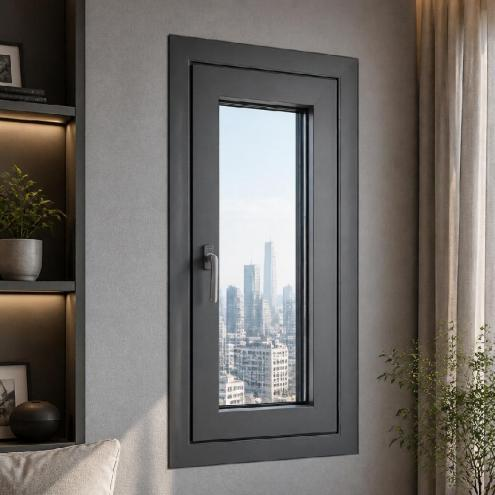
Window systems rely on correctly selected and maintained hardware for lasting operation.
Electrochemical corrosion can develop when moisture and oxygen interact with metal surfaces in the presence of salts, acids, or other electrolytes. Several exposure mechanisms matter in window and door applications:
● Atmospheric corrosion: Humidity, rainwater, and airborne mist can keep metal surfaces damp.
● Salt-spray corrosion: Coastal sea breezes and road de-icing salts can introduce chlorides.
● Crevice corrosion: Water and dust may collect in hinge gaps, screw holes, and profile grooves.
● Galvanic corrosion: When different metals are electrically connected in a wet environment, the less noble metal may corrode faster.
● Coating-damage corrosion: Scratches and damaged finishes can expose a substrate, leading to pitting, blistering, red rust, or white rust.
The risk therefore depends on more than the metal alone. Surface treatment, drainage, component design, and the installation environment all contribute.
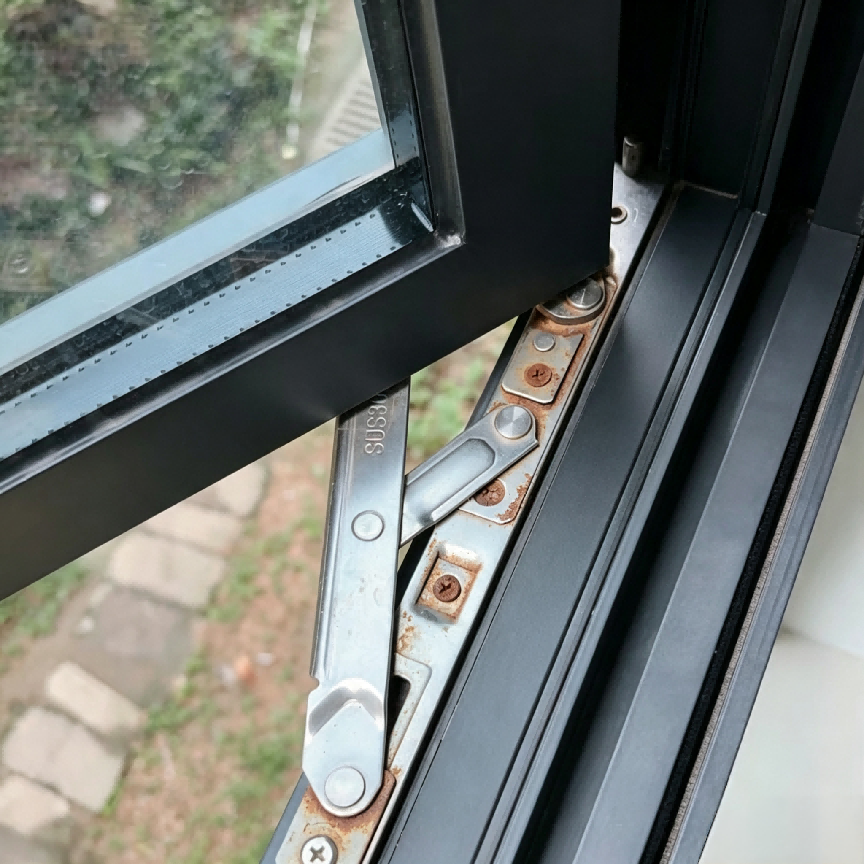
Example of visible corrosion affecting window friction-stay hardware.
304 stainless steel is commonly suitable for many ordinary urban applications, but it is not completely rust-proof. For coastal environments with significant chloride exposure, 316 stainless steel or other appropriately specified corrosion-resistant grades are often preferable. Buyers should confirm the actual grade, component thickness, surface condition, and supplier specifications rather than relying only on the label “stainless steel.”
Aluminum forms a protective oxide layer naturally. Hardware parts made from aluminum alloy may also be anodized or powder-coated to improve resistance to corrosion and wear. Coating thickness, adhesion, and sealing quality are important when evaluating a proposed finish.
Zinc alloy die-castings are common in handles and lock bodies and can be cost-effective. Their corrosion performance is strongly influenced by electroplating or coating quality. Inadequate coating thickness or adhesion can allow blistering, white rust, and eventual substrate deterioration.
Fasteners are easy to overlook, but poorly protected carbon-steel screws can corrode before the main hardware. Specify compatible corrosion resistance across the complete assembly. Depending on the application, possible choices include properly galvanized fasteners, zinc-flake-coated fasteners, or stainless steel.
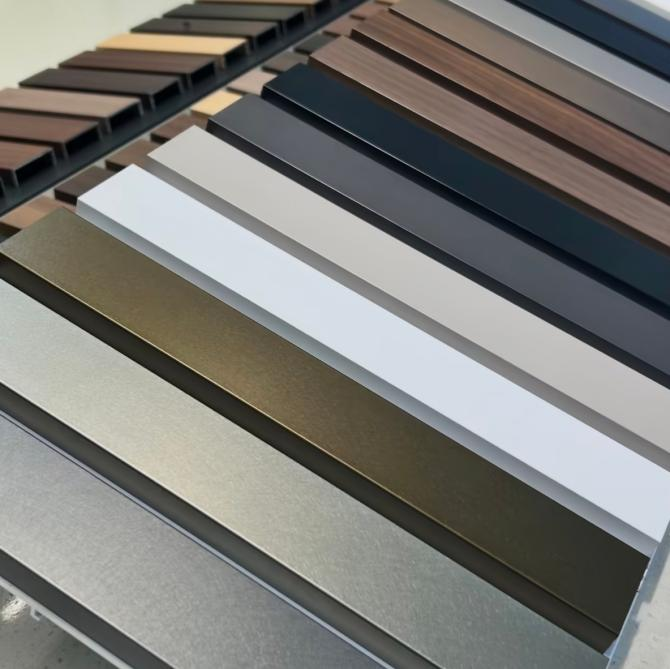
Aluminum profile finishes illustrate the role of surface treatment in durability.
Neutral salt spray testing, including methods described in GB/T 10125 and ASTM B117, is used to compare corrosion behavior under controlled accelerated exposure. Reports may describe the occurrence of white rust, red rust, and other changes and may assign ratings under a stated evaluation method.
A higher number of salt spray test hours does not automatically translate into an equivalent number of years in actual service. Real installations are affected by rainfall, humidity, contaminants, cleaning practices, crevice water retention, and scratches.
When reviewing test reports, check the tested substrate, coating system, exposure conditions, acceptance criteria, and reported results—not only the headline duration. Ask the supplier whether the tested sample matches the hardware supplied for your project.
● Match materials to site conditions: Standard corrosion-resistant solutions may be appropriate inland, while coastal, high-humidity, industrial, or de-icing-salt environments call for more demanding specifications.
● Check the complete hardware system: Handles, hinges, locking components, transmission parts, rivets, and screws should have compatible corrosion protection.
● Review water drainage: Confirm that drainage holes remain open and that hardware installation points do not trap water or debris.
● Choose the cleaning method carefully: Use water or a neutral cleaner; avoid strongly acidic or alkaline products. Fresh-water rinsing and drying may help in coastal locations.
● Inspect and lubricate regularly: Check for loose screws, damaged finishes, and blocked drainage. Use only the lubricant recommended by the hardware manufacturer.
● Address early corrosion: Clean, repair, or replace components when rust, blistering, or coating deterioration appears, before operation or safety is affected.
Long-term window hardware corrosion resistance is a system property. Materials, protective finishes, fasteners, drainage details, exposure conditions, and routine maintenance all matter. For international construction projects, selecting the appropriate hardware specification early can help reduce avoidable maintenance and operation problems.
When requesting a quotation for aluminum windows and doors, share the project location, distance from the coast, expected exposure, and any material or testing requirements. This allows the manufacturer to discuss a hardware configuration appropriate to the project, rather than assuming a single specification will fit every environment.
Not always. 316 is often preferred for chloride-rich exposure, while other grades and coating systems may be adequate under less aggressive conditions. The final choice depends on the project environment and requirements.
No. Salt spray tests are controlled comparison tools. Their hours should not be converted directly into years of real-world service.
Small fasteners may have different substrates or protective finishes from the rest of the hardware. Moisture can also remain around screw heads and installation holes.
REGWEN manufactures aluminum windows and doors for international projects. For project-specific hardware questions, share your site conditions and technical requirements with the REGWEN team for review.

Factory Address: No.21 Longfei Road, Qinghu Street, Jiangshan City, Zhejiang Province, ChinaHangzhou Office: Sanshen International Centre, Shuanglong Street, Jiangcun Street, Xihu District, Hangzhou, Zhejiang, China


whatsapp: +86-18072983795

+86-571-86632298
Copyright © Zhejiang Ruiguan Door and Window Co., Ltd. Rights Reserved.
 Wholesale Aluminum Alloy Windows Manufacturers